What Is Web3? A Simple Guide to the Next Generation of the Internet
Introduction
The internet has changed dramatically over the past few decades. What began largely as a way to access and read information developed into a highly interactive environment where people communicate, work, shop, create content, manage businesses, and exchange digital services.
Now, another idea is gaining attention: Web3.
Web3 is often described as the next evolution of the internet. But the term can mean different things depending on who is using it.
At its core, Web3 describes a proposed model of the internet that places greater emphasis on user participation, decentralized systems, digital ownership, and direct interaction between users and applications.
So, what does that actually mean?
Let’s break it down.
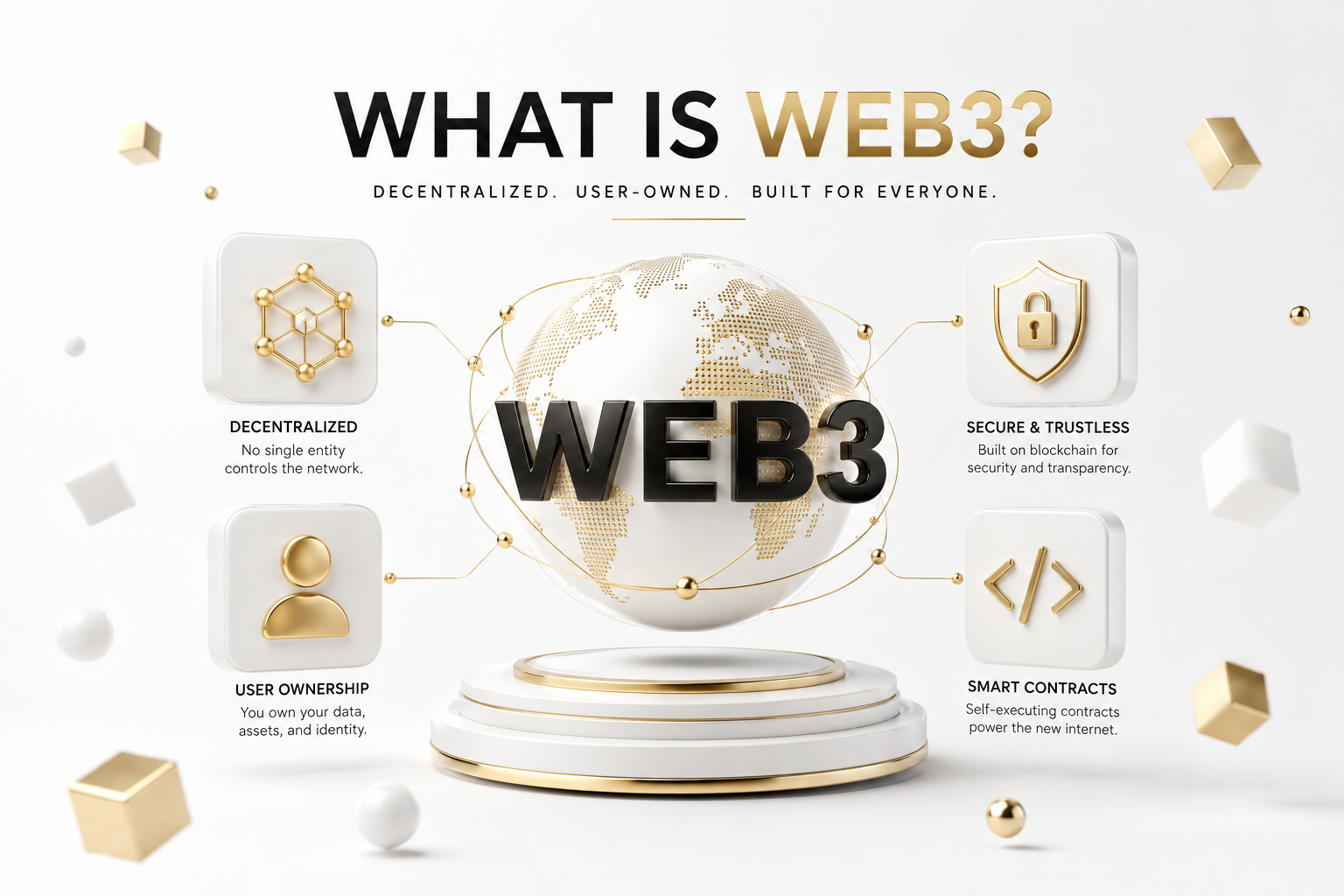
What Is Web3?
Web3 is not a single website, company, blockchain, or application.
Instead, it is a vision for how internet services could be structured differently.
According to the National Institute of Standards and Technology (NIST), Web3 is a proposed restructuring of the internet toward a more user-centric model, with decentralized and distributed systems playing a greater role. It also envisions digital tokens representing assets and cryptocurrencies or other web-native currencies being used for payments and participation.
In simpler terms, Web3 aims to give users a greater role in controlling digital assets, participating in networks, and interacting with applications.
This doesn’t mean that Web3 has completely replaced the internet we use today. Rather, it represents a collection of technologies and ideas that are being developed and tested.